The Forward Deployed Engineer Is the Hottest Job in AI. Here’s How to Land One.
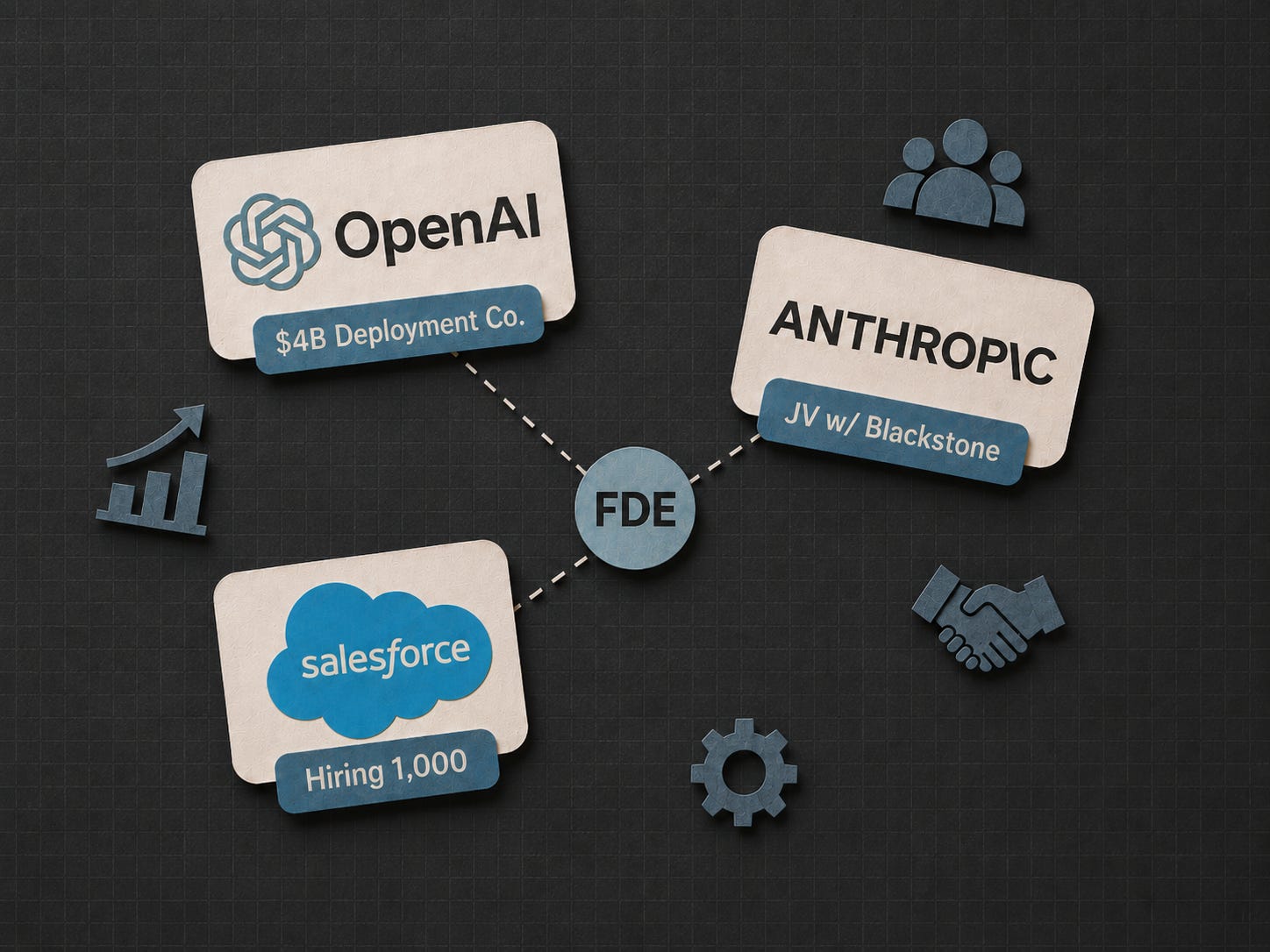
OpenAI built a $4 billion company around it. Anthropic did too, and Salesforce is hiring them fast. And you don’t need a traditional engineering background to get in.

In May, OpenAI spent $4 billion to build an entire company around a single job title. Not a product. A job function.
Anthropic launched its own version at the same time in partnership with Blackstone, Hellman & Friedman, and Goldman Sachs creating an enterprise AI services arm staffed with engineers who embed directly inside client teams. Salesforce has committed to hiring a thousand of them for Agentforce. Palantir, the company that coined the term twenty years ago, has been quietly minting them into founders and execs the entire time.
The title is Forward Deployed Engineer.
Job postings for it have grown roughly 800% in under a year, one of the fastest-rising roles in the entire market. And here’s the part most people miss: you don’t have to be a traditional engineer to land one.
I run AI strategy at HatchWorks AI, and the forward deployed engineer is one of the most critical roles we’re hiring for right now. So I’ve watched this from both sides. I see what the labs are doing, and I see exactly who we hire and why. Let me break down what an FDE actually is, the qualities that get you the job, who’s hiring, and how to position yourself to be one of them.
What a Forward Deployed Engineer Actually Is
Start with the problem the role exists to solve.
The AI models are extraordinary. That stopped being the hard part. The hard part is everything between a working model in a demo and a working system inside a real business. Messy data. Legacy software. Compliance rules. A sales team that does things one specific way for reasons nobody wrote down. The gap between “the AI can do this” and “the AI is doing this, in production, for this company” is enormous. That gap is where most enterprise AI projects quietly die.
A Forward Deployed Engineer is the person who closes it.
They embed inside a company, sit with the people doing the actual work, find where AI can create real value, and then design, build, and ship the full system end-to-end with the customer’s team. They don’t hand over a slide deck and a recommendation. They stay in the room until the thing is live and the customer can run it without them.
Palantir originated the model. Send your best technical people directly to the customer, have them live inside the problem, and let them build the solution on-site instead of guessing at it from headquarters. Marty Cagan at SVPG describes it as sending empowered builders to “spend intense time embedded with customers” so they can discover a solution that actually works. Salesforce describes its FDEs as “part personal tech guru, business consultant, and hand-holder.”
That hyphenated job description is the whole point. An FDE is part consultant, part engineer. They walk into a business, figure out where AI fits, and then build and deploy it themselves. One person, or one small pod, owns the entire loop. From “what should we even build” to “it’s live and working.”
This is the natural endpoint of a shift I’ve been writing about for a while. AI didn’t replace builders. It multiplied who gets to be one. The FDE is what you get when that leverage meets a real customer problem and someone has to own the outcome.
Access Isn’t Adoption
There’s a deeper version of this problem, and it’s the part most people miss.
Any company can buy Claude or ChatGPT licenses tomorrow. That changes almost nothing on its own. Access isn’t adoption. You can put a treadmill in every employee’s home and not move the needle on anyone’s health, because the treadmill was never the problem. The habit is. AI is as much about changing old habits and building new ones as it is about the technology.
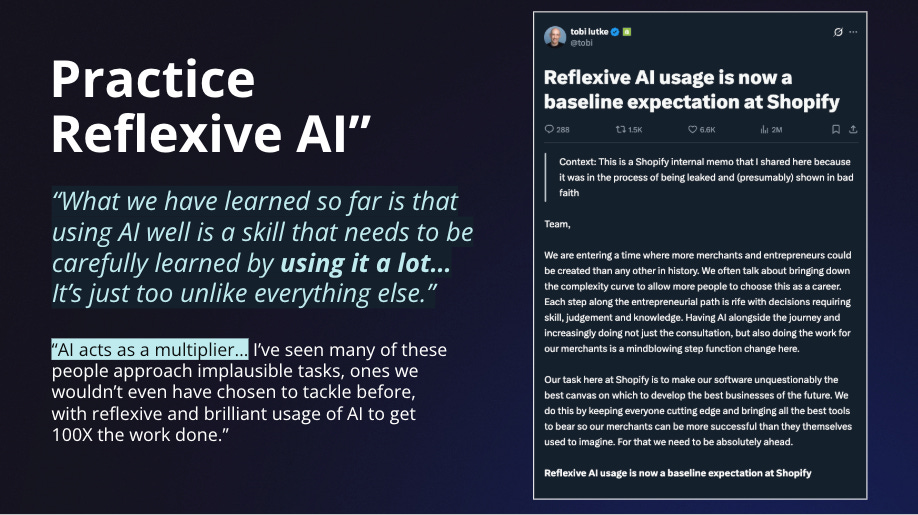
Using AI well is a skill, and skills only get built by doing. Tobi Lütke, Shopify’s CEO, put it perfectly in a now-famous internal memo: “What we have learned so far is that using AI well is a skill that needs to be carefully learned by… using it a lot. It’s just too unlike everything else.” That’s exactly why he made “reflexive AI usage” a baseline expectation for every employee at the company.
So the FDE job is never only technical. A huge part of it is human. They don’t just wire the AI into the systems. They change how the people work. They sit with the team, build the new habit alongside them, and make the usage stick long after they’ve left. That’s the whole difference between a pilot that gets celebrated in a slide deck and a system that’s still running a year later.
The Qualities That Actually Matter
Here’s where the role gets interesting, and where the “you don’t need to be a traditional engineer” part holds up.
Yes, FDEs are technical. OpenAI’s New York posting lists $220K to $280K plus equity and asks for experience building or deploying LLM-powered systems and familiarity with a cloud platform. This is a builder role. I’m not going to pretend otherwise.
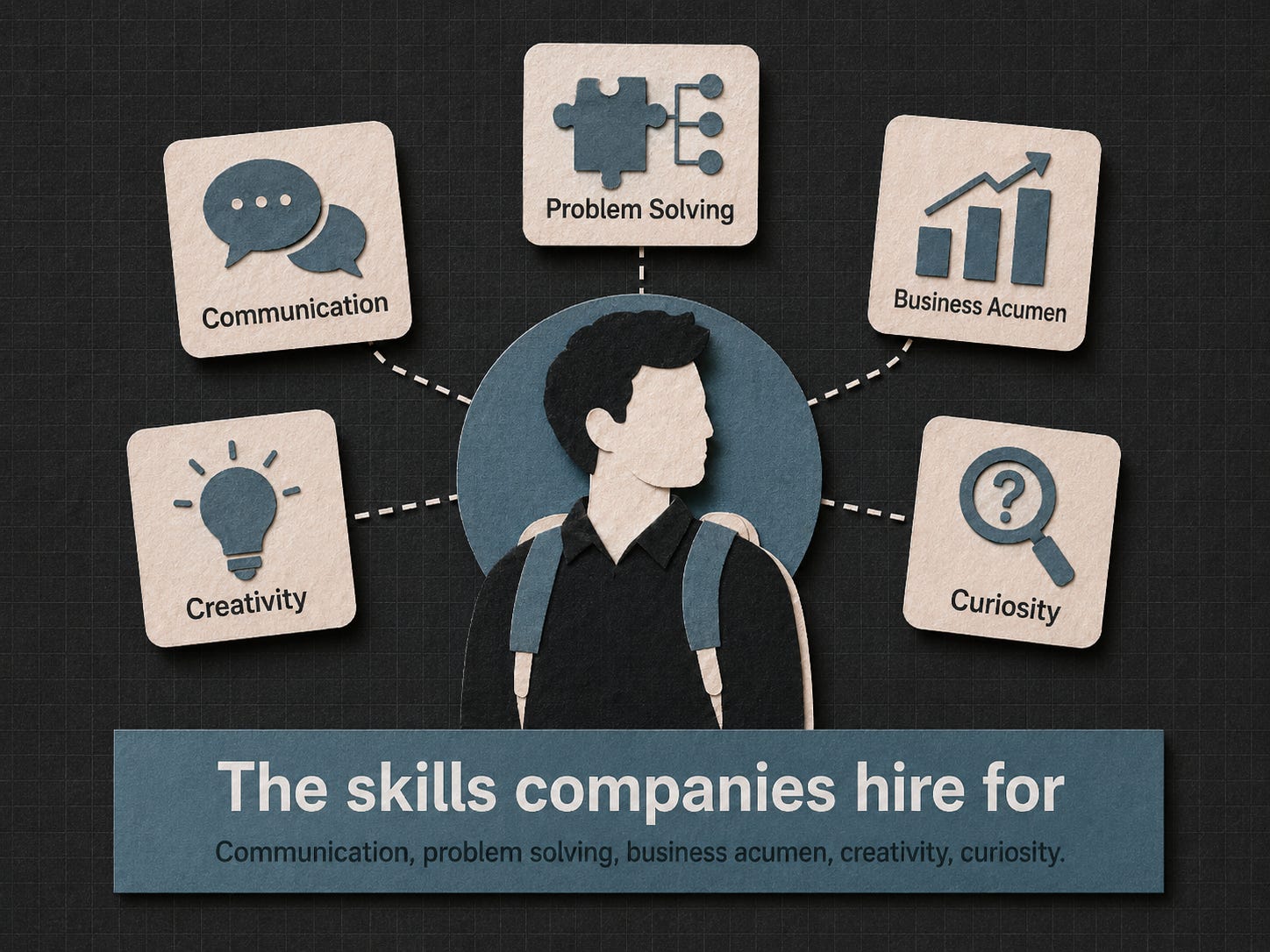
But the technical bar is the table stakes, not the differentiator. When I look at who actually succeeds in this role, the separators are almost never the things you’d put on a coding resume:
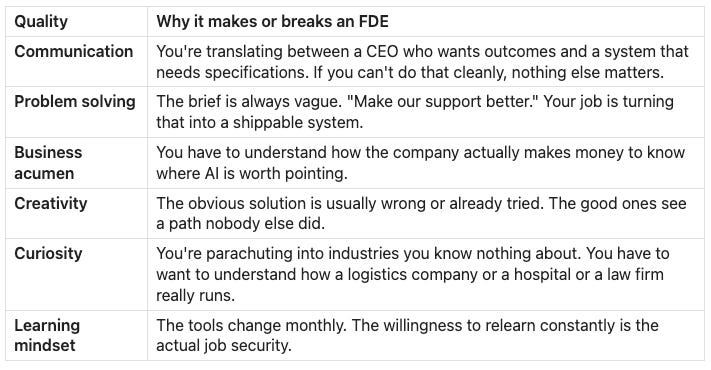
Notice what’s on that list. It’s the stuff a great consultant, a sharp product manager, a strong ops lead, or a scrappy founder already has. The technical layer can be learned (faster now than ever, because you’re learning to build with AI, not from scratch). The translation layer between AI and real business problems is much rarer, and it’s what companies are actually starving for.
This is the same pattern as the AI wage premium I covered earlier this year: the market isn’t paying for “knows how to code,” it’s paying for “knows how to think alongside these tools and put them to work”. The FDE is the highest-leverage version of that bet.
The AI Pay Gap Is Here. And It Just Doubled.

PwC analyzed nearly a billion job postings across six continents. The conclusion is blunt: if you’re not building AI skills, you are actively leaving money on the table.
Who’s Hiring Right Now
The demand signal here is loud, and it’s coming from the top of the market.
OpenAI stood up a roughly $4 billion entity called The Deployment Company built specifically around forward deployed engineers, and is hiring them directly at $220K to $280K plus equity.
Anthropic launched an enterprise AI services arm with applied AI engineers who embed with client engineering teams.
Salesforce has committed to hiring around a thousand FDEs to deploy Agentforce, running them in small pods that live with one customer for months at a time.
Palantir has been building them for two decades and treats the role as a launchpad. A striking number of FDE alumni go on to found companies or run product orgs.
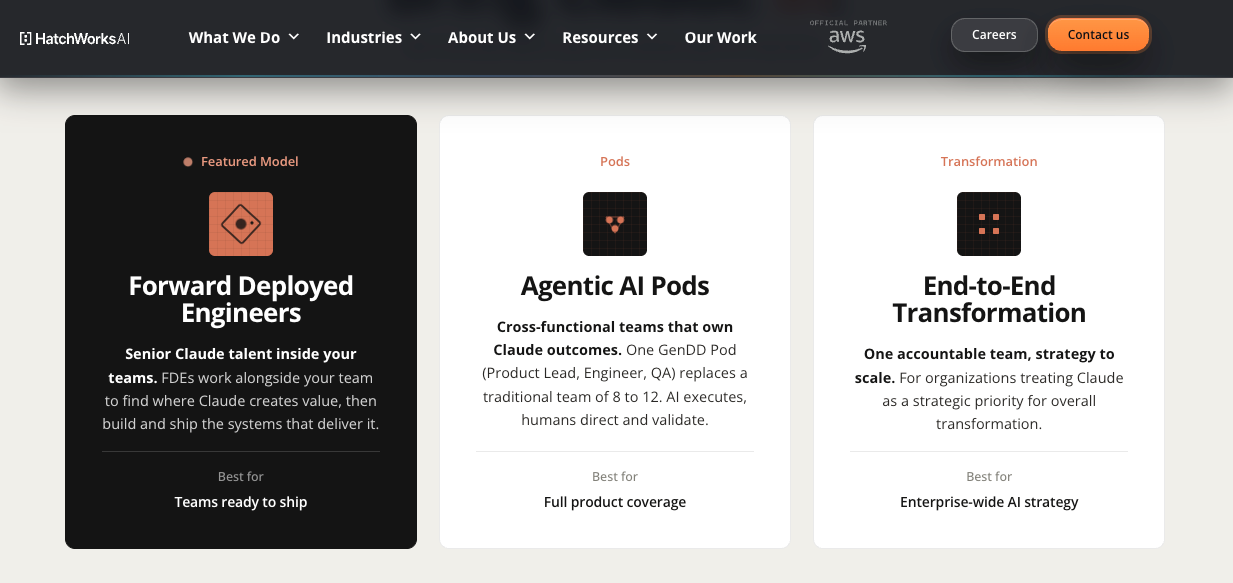
And then there’s where I sit. At HatchWorks AI, the forward deployed engineer is a named role inside our GenDD (Generative-Driven Development) methodology, and it’s one of the most important hires we’re making right now. When a client needs AI that actually ships and sticks, an FDE is who we put on the ground. The labs are building the models. Companies like ours are the ones embedding the people who make those models pay off inside real businesses. That demand is not slowing down.
How to Actually Get the Job
This is the part you commented for. Here’s the playbook.
