Inside Google I/O 2026: Notes From Google's VIP Creator Group
Notes from the Google I/O Builder Cohort, the live Talking AI podcast I recorded on site, and the real story underneath thirty-plus announcements.

Two years ago, Google was processing 9.7 trillion AI tokens a month. Last May, it was 480 trillion. This month, it’s 3.2 quadrillion.
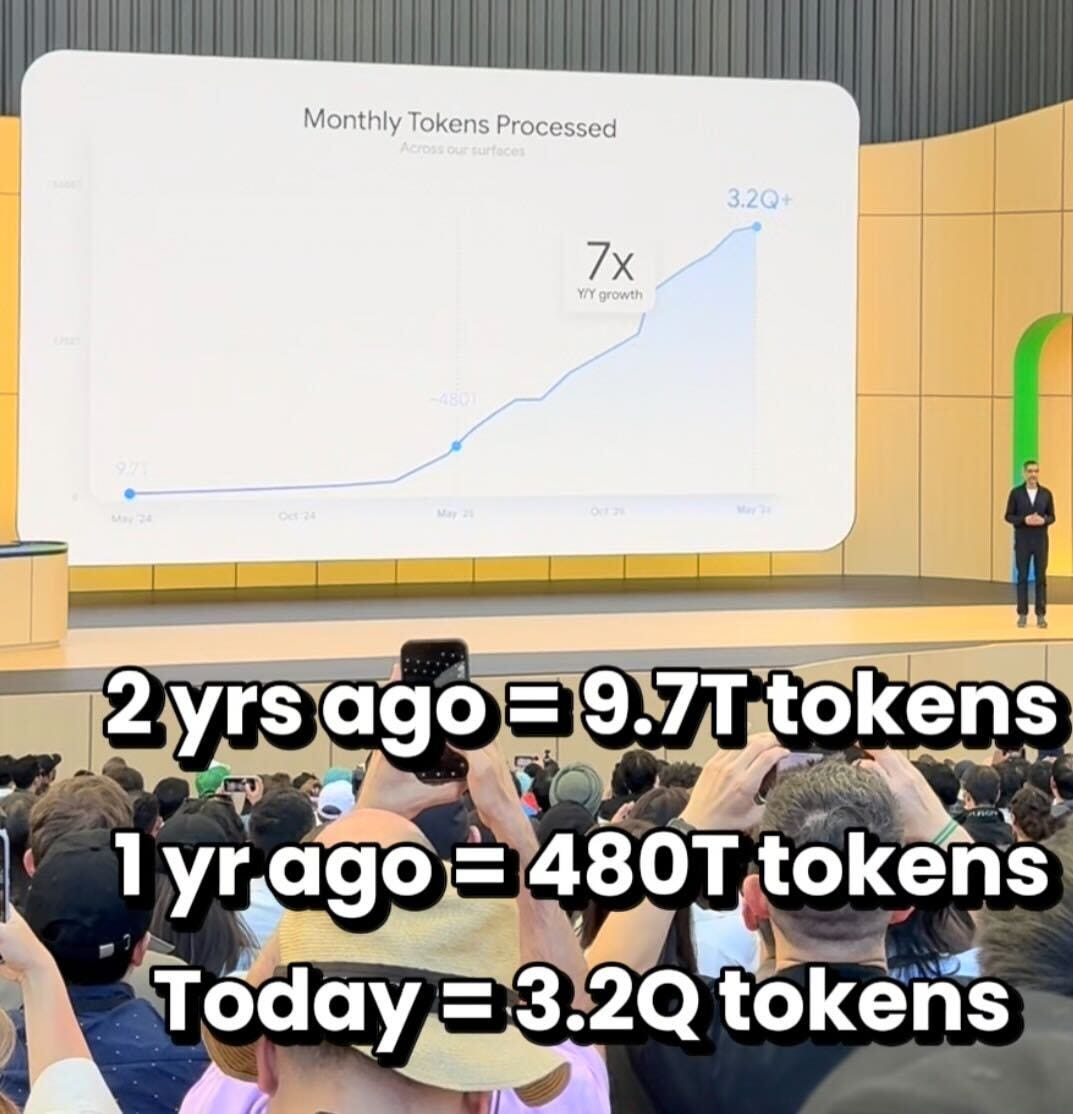
That’s a 330-fold jump in 24 months, with a 7x leap in the last year alone. Google’s spending roughly $180 to $190 billion in capex this year, six times what they spent in 2022. And they just spent two hours telling us how all of that infrastructure is going to get put to work.
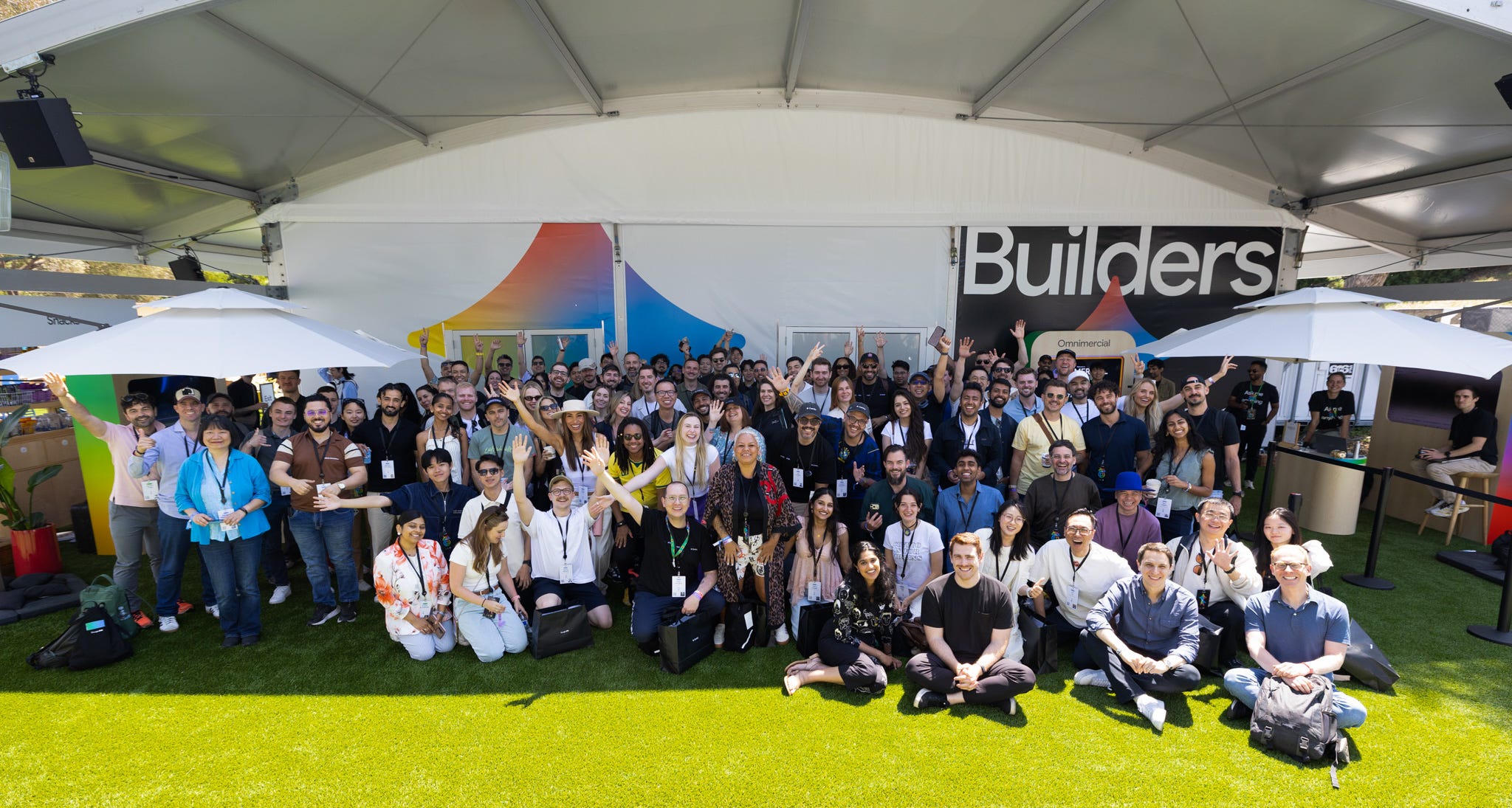
I was in the room for it. Google invited me to I/O 2026 as part of their Builder Cohort, a small group of AI creators and builders. Walking the floor I bumped into CatGPT, Greg Isenberg, Brand Nat, RPN, Kushank Aggarwal (Digital Samaritan), Marcin Teodoru (MarcinAI), Jay Enriquez (RoboNuggets), and a dozen others you’d recognize from your feed. It’s the closest I’ve come to feeling like the entire AI internet was in one room.
(PS. No, everyone else is not short… I am just 6’8” 😁 )
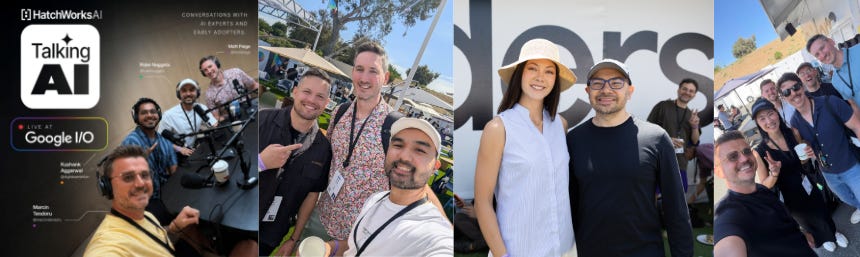
It’s also where I recorded a special live episode of Talking AI, the podcast I host at HatchWorks.
Three creators:
Kushank Aggarwal (Digital Samaritan)
Marcin Teodoru (MarcinAI)
Jay Enriquez (RoboNuggets)
2.2 million combined followers, 30 minutes to figure out what actually matters from the keynote. If you want the full unfiltered conversation, that’s where to start. The rest of this post is my own breakdown: what was announced, and what I think actually matters.
What Google announced
There were several keynotes. Google announced 30+ things. Here are the ones that actually move the needle.
Gemini 3.5 Flash and the token bet. The new headline model is cheaper, four times faster, and beats Gemini 3.1 Pro on nearly every benchmark. Google’s pitch: their top enterprise customers could save over $1 billion a year just by shifting 80% of their workloads to Flash. Maybe true, maybe finance-deck math. But the direction is unmistakable. Frontier intelligence is getting fast and cheap at the same time. Gemini 3.5 Pro is rolling out next month.
Search, completely rebuilt. This was the under-discussed story of the day, and it’s probably the most consequential. Search now generates custom dashboards on the fly. Ask “what is a black hole” and Search builds you an explainer video, not a list of links. Information agents monitor topics for you in the background. The Universal Shopping Cart maintains a single cart across every retailer on the web, which is Google’s most direct shot at Amazon in years. AI Mode hit 1 billion monthly users in its first year. AI Overviews is at 2.5 billion. Search isn’t a search box anymore. It’s becoming a workspace. And how we search YouTube is getting an AI overhaul.
Gemini Spark. Google’s first real agentic consumer product. Spark runs 24/7 on its own Google Cloud VM, powered by Gemini 3.5 on the Antigravity harness. Your laptop doesn’t need to be open. You give it a goal, it works in the background, it comes back with progress. Beta to Google AI Ultra subscribers next week. This is Google’s bet that the chatbot era (I ask, it answers) is ending and the agent era (I set a goal, it goes) has consumer-readiness.
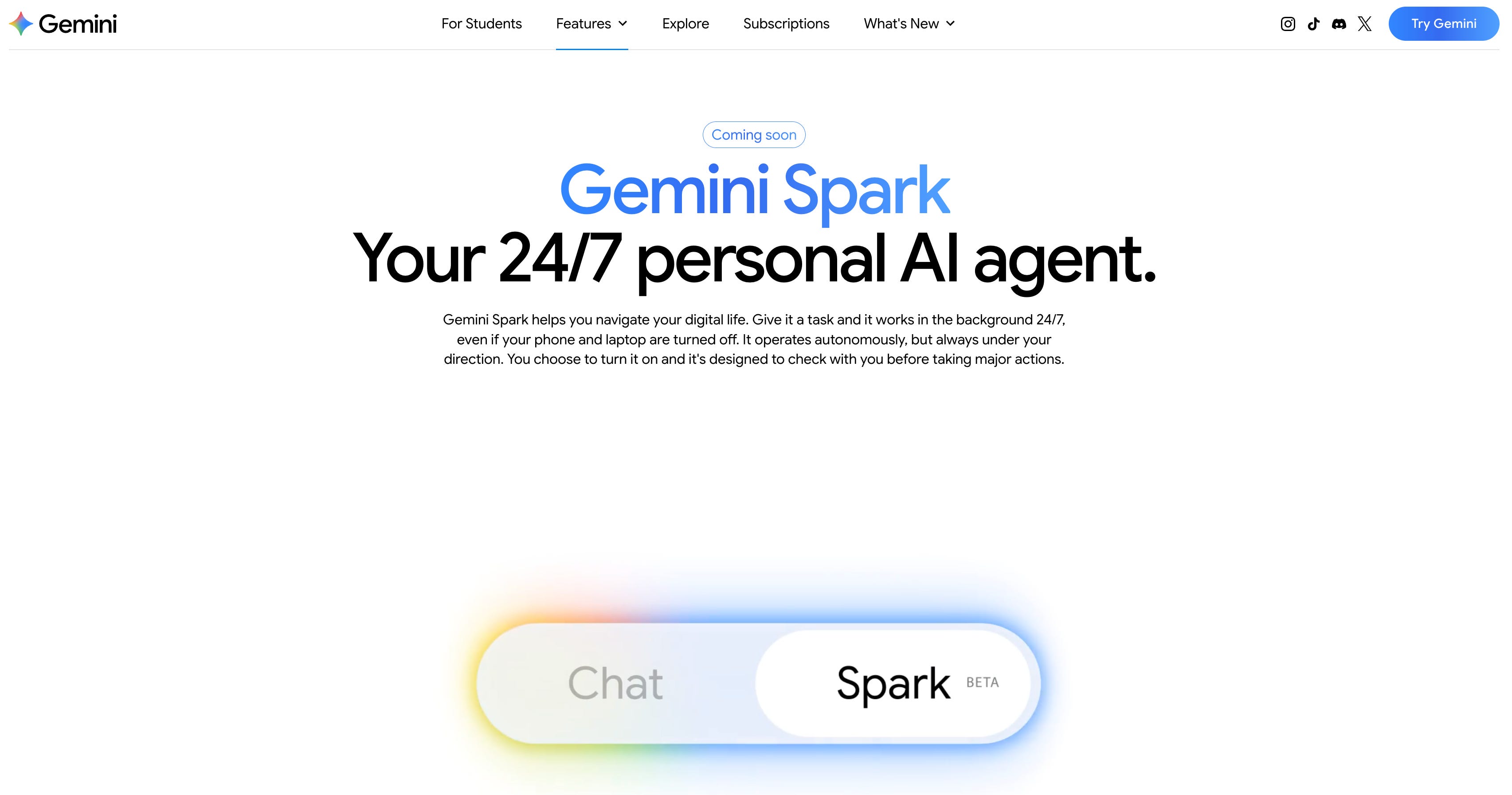
Daily Brief. The out-of-the-box version of Spark for everyone else. An agent that synthesizes inbox, calendar, and tasks into a morning brief. This is the Chief of Staff pattern at Google scale. Rolling out to AI subscribers immediately.
Funny enough, I built a similar Chief of Staff Agent with Claude Code. Here’s how to do it.
Antigravity 2.0. Standalone desktop app for developers building with agents. Multi-agent orchestration, a new CLI, an SDK, and Managed Agents you can spin up via a single API call. Solid update if you’re building on Google. Less of a “wow” beat than the consumer-side announcements, and a few people on the floor told me it was the one announcement they expected more from.
Creative tools (Omni, Pics, Flow). Omni is Google’s new world model. It takes any input (text, images, video, audio) and outputs video grounded in physics and continuity. The bigger play is what Demis Hassabis has been saying for years: a real world model is the path to AGI, and Omni is Google’s first consumer-facing piece of that bet. Pics is the editing-first image tool where every element is a manipulable object instead of a flat layer. The shift it represents: you’re no longer stuck with whatever the AI generates. You get the same granular control a designer has in Photoshop, except the layers create themselves. Flow ties it all together. It adds an agent, brand-content tools, and music for a complete creative production stack.
Here is the demo of Omni live from Google I/O.
Intelligent eyewear (Android XR). Audio-only glasses launching this fall via Warby Parker and Gentle Monster; display versions later. Live translation, Gemini Live in your field of view, AI image generation from what the cameras see. I tried these live and the two coolest three coolest features were:
audio is spatially designed where no one around me could hear it except me.
the live translation is unreal. I chatted with someone in Korean.
It’s ability to pick up in context around the world was elegant. I had it play a song based on looking at a poster a on a wall.
Google AI Ultra at $100/month. New top tier for power users, developers, and creators. 5x the usage limits of AI Pro, 20TB of cloud storage, and Spark beta access. Tells you who Google thinks the next big customer segment is.
What actually matters
A few things I keep coming back to.
Distribution is the moat. Every founder I talked to between sessions came back to this. Google doesn’t need to win the “best model” race because they have 3 billion Search users, 1 billion AI Mode users, 2.5 billion AI Overview impressions, 900 million on the Gemini app. AI doesn’t need to come to you. It’s already inside Search, Docs, Gmail, Maps, Chrome, Android, YouTube. The question stops being “is Gemini better than Claude or GPT?” The question becomes “does it matter when most people will only ever use one?”
Search is the surprise story. I went in expecting the keynote to be about Gemini Spark or Omni. The thing I think the rest of the year reorganizes around is Search. Generative UI in Search means billions of people are about to have their first vibe-coding moment without realizing it. They’ll ask a question, Search will build them a custom interactive dashboard, and the idea that you have to be a developer to make software dies a little more. Pair that with the Universal Shopping Cart and you’ve got Search becoming the action layer of the web.
Content creation is becoming content direction. Omni, Pics, and Flow together is a full creative pipeline inside Google. The human’s job is shifting from production to taste, prompting, and judgment. This is the same thesis I wrote about in Purpose Is the Moat. When everyone has the same tools, the differentiator is what you decide to point them at. I/O 2026 was the first major launch event where I felt that shift treated as the default, not the future.
Google’s in the agent race now. Spark is the big step everyone was watching for: a 24/7 personal agent that runs on Google’s own VMs, talks to your Google stack, and grows from there. That’s Google saying out loud that the chatbot era is ending and the agent era is the next product surface. They’re playing it on both ends. Spark for consumers, and the new Gemini Enterprise Agent Platform for the enterprise, which collapses Vertex and the rest of the GCP AI stack into a single cohesive operating layer.
At HatchWorks AI, where I’m VP of Strategy, we are a Google Cloud Select Service Partner building on it, so we are seeing this first hand.
What I’ll say from that vantage: the innovation Google gets right in enterprise tends to flow downstream to consumer. Whether Spark lives up to the keynote demo is the open question, but the bet is real. Google isn’t letting OpenAI and Anthropic own this category, and they have the distribution to make their version the default for billions.
If you’re in the AI space (building, creating, advising), this was the I/O where the math changed. Not because of any one launch. Because Google made it clear they’re going to embed AI in everything they own, and they own a lot.
For the full unfiltered take, the Talking AI live episode is here.
I’m not betting against any of it.